Wine Club Spring 2026
To me, it kind of feels like we haven’t even gotten a real Bend winter yet and I’m already looking ahead into Spring, Summer, and Fall (hello, October wedding!) Instead of getting us all too far ahead of ourselves by talking about the coming season, I thought I’d talk a bit about my ethos here at WCP & the types of wines I’ve found myself enjoying lately. During my studies for my B.S. in Biology degree, the classes I chose to take focused on macroscopic ecological studies, not microscopic interactions of chemicals, cells, etc. I’ve always been fascinated by the intricate interactions of the natural world, and having been raised in the suburbs of Baltimore, I looked to change my own net environmental impact through my studies. By learning more about the natural world around me, I hoped to learn my place and where I fit.
In my work, I like to think of things the same way. When it comes to the Old World (Europe) I gravitate towards the traditional grape varietals rather than those planted to please a crowd, like Sangiovese vs. Cabernet Sauvignon in Tuscany for example. I do enjoy experimentation in the winemaking techniques which give different inflections to those otherwise traditional wines.
Grapes also don’t turn themselves into wine and jump into bottle of their own accord. As natural as a winemaker claims to be, they must still intervene at different points to make a delicious wine, it’s how they do this that makes the difference. I prefer wines with a “farming first” ethos, where good farming gives you the best change at truly great wine. If you farm well first, you shouldn’t have to add anything in the way of sugar, acid, tannin, enzymes, etc. in the cellar. An expression I heard someone say recently was “I enjoy wines made from grapes, not from trees.” To translate: I enjoy wines that focus on the profile of the fruit and terroir generally without the added flavors of oak. A bit can be nice sometimes, but I try to avoid the really big ones. My fiancée is my dental hygienist after all, gotta protect those teeth!
To summarize, the wines I bring you are the ones I enjoy the most: they are as natural and traditional as possible while remaining exciting, innovative, and boundary-exploring. I look for the producers who are at this intersection and do so with respect for the planet. This often means they are making minuscule amounts of their wines, and I enjoy the challenge of gathering them and getting them into the right hands. The wine industry still has a long way to go, but I’m proud to say I’m doing my part!
Raphaëlle Guyot - Aligoté “Galatée” 2023
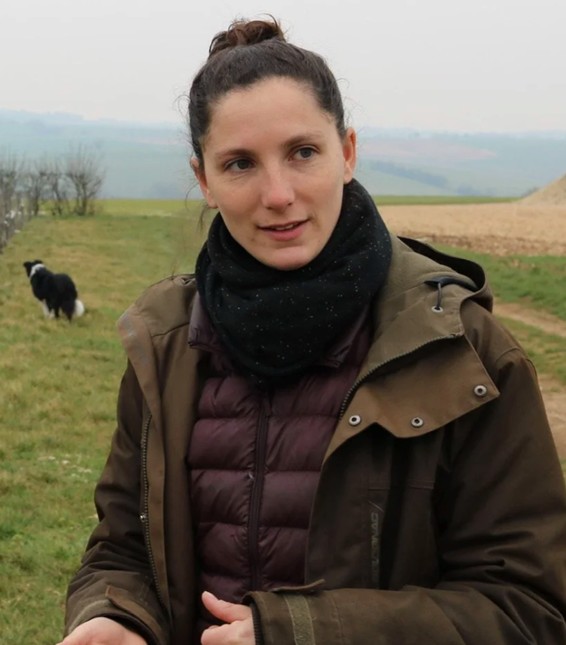
I have been an unwavering fan of Raphaëlle’s wines since I first tasted them a few years ago. Her project is centered in a lesser-known part of France’s Burgundy region called the “Yonne” department, in which lies Chablis as well as Saint Bris, Burgundy’s only Sauvignon Blanc appellation. She didn’t initially set out to be a winemaker, however, having been raised in Paris and gone to business school. One great glass of wine was all it took to change her trajectory, and once she graduated she went to work in China for a wine importer before returning and working internships in France. She began her estate in 2018 with a vineyard called “les Robinettes” planted to Pinot Noir and Chardonnay, she found the vines behind a hedgerow of blackberries. Her production has always included a large portion of grapes purchased from other respected growers in order to scale her winery without adding more farming work. In 2024, her vineyards were struck by an unprecedented hailstorm, so she expanded her scope quite a bit, including grapes from the neighboring Loire Valley. Known as “the other white grape” of Burgundy, Aligoté produces crisp and mineral-driven whites and hers was sourced from an esteemed winery called Domaine Verret. This 2023 vintage wine was a later release from her, as one of her other importers backed out last minute… their loss! We get to benefit from a bit of bottle age here, adding complexity to this otherwise crisp white. Pair this with raw oysters, crudité, or that first hot “false summer” day.
Bastien Beny - Cuvée Weiss 2022
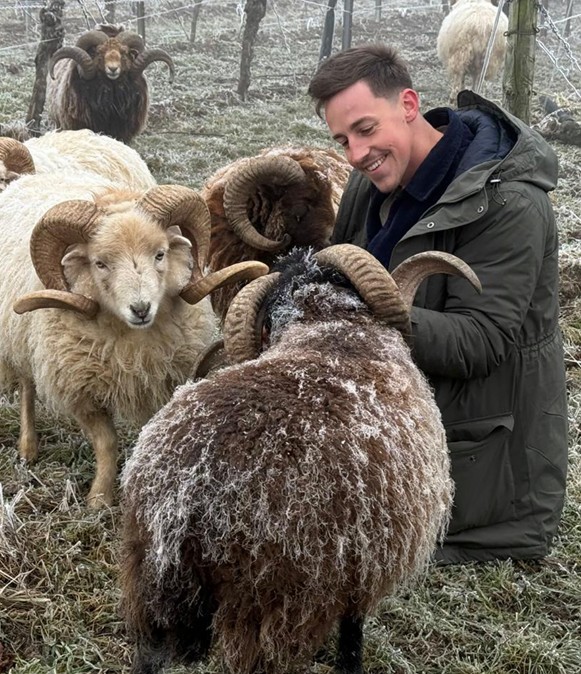
Before starting his winery in Germany’s Rheinhessen region, Bastien Beny worked in Michelin-star kitchens and was constantly exposed to the best wines in the world. One of those, Klaus Keller, ended up becoming his mentor. Following in the footsteps of giants, Bastien took over his family estate in 2020 and quickly converted the farming to organic and Biodynamic. He utilizes cover crops, makes his own compost (many certified producers still purchase theirs) and his labels highlight his flock of horned sheep who graze (& fertilize) the vineyards. The estate cultivates Germany’s signature grape varieties such as Riesling, Sylvaner, and Dornfelder, along with international varieties including Chardonnay and Kerner, and the wines are celebrated for their natural purity, artisanal craftsmanship, and the vibrant spirit of the rejuvenated Rheinhessen. This blend of Weissburgunder (Pinot Blanc), Kerner, Riesling, and Müller Thurgau with a few days of skin contact is a fruit-forward blast of flavor with a bit of springtime floral aromatics, perfect for heartier sausage or chicken-based meals. This Skillet Kielbasa and Sauerkraut recipe would do the trick, it’s a long time favorite of mine and versatile one-pot meal to cook on weeknights or with friends coming over!
Annamária Réka Koncz - Óra 2023
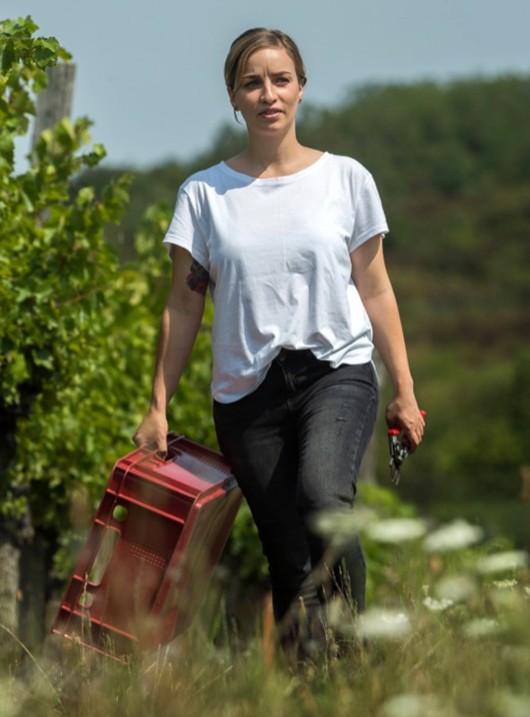
Born in 1988 in Vásárosnamény, a small town almost 300km east of Budapest, Réka took a very indirect path to winemaking. Her earliest memories of interest in the subject came from a 10th grade essay responding to the prompt “What would I be?” She wrote she wanted to be a grape and would give her life for good wine; that essay is framed in her grandparents house. Other career ideas included UFO studies, biologist, ornithologist, or forest warden. Instead, she studied Horticultural Engineering in Hungary, then got her masters in Agriculture in Copenhagen where she evaluated South African vineyard yeast strains. It was here she discovered natural wines without chemical or technological inputs, and as she puts it, "there was no way back.” She started her project with help from her family in Barabás and her first wines were released in 2018. Her estate vineyard is accessed only through deep forest and lies directly on the border with Ukraine; you can see armed guard towers through the trees. Óra is a skin-fermented orange wine of 30% estate Királyleányka, Rhein Riesling, Hárslevelű, and 70% Furmint from the neighboring region of Tokaj. All from volcanic soils, all spend 4-5 days on skins. I’m pretty thrilled to offer you this one, they are incredible wines from a bright talent, and I’ve only ever been offered up to a case of any of them before. Pair this with stargazing in the Badlands for the Perseids meteor shower on April 12-13, or with friends with equally adventurous tastebuds.
Benedicte et Stephane Tissot - Arbois Rouge “DD” 2022
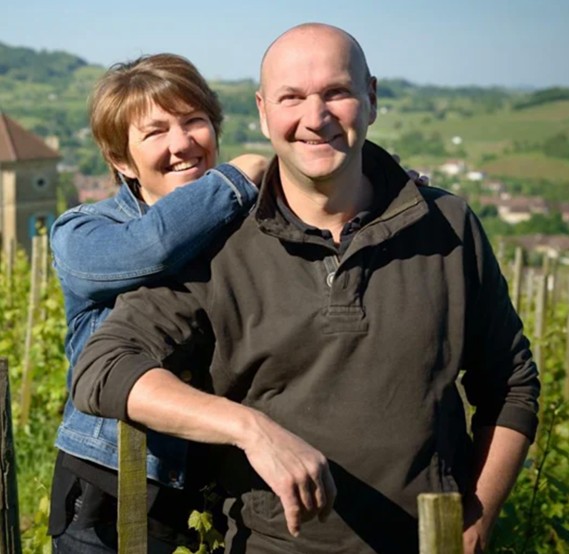
Wines from the Jura have been featured in club before, but they probably never would have been were it not for Stephane Tissot, whose wines have been a driving force behind the region’s resurgence among collectors, enthusiasts, and professionals alike. His father, Andre or “DD,” began the domaine in 1962, and Stephane’s first vintage was 1989 when he was only 19. He quickly made a conversion to organic and biodynamic farming, one of the first in the region to do so. Initially, winemaking was focused more on the cellar, with more modern winemaking decisions as the main influence on the flavor of the wine. It was quickly realized that good farming yielded the best wines, not intervention by the winemaker, so more low intervention techniques were quickly adopted. They began separating production of the wines from vineyard to vineyard, shining a light on the idea of terroir and place. His wines quickly attracted a lot of attention and acclaim, so much so that the entire region followed in his footsteps and is now known for producing some of the most honest wines in the world. “DD” is an homage to his father and is a more traditional Jura blend of Trousseau, Poulsard, and Pinot Noir made entirely without sulfites, yet it is clean and stable. Enjoy this with confit duck breast, or any other roast game.
Jure Poberaj - Mencia 2023
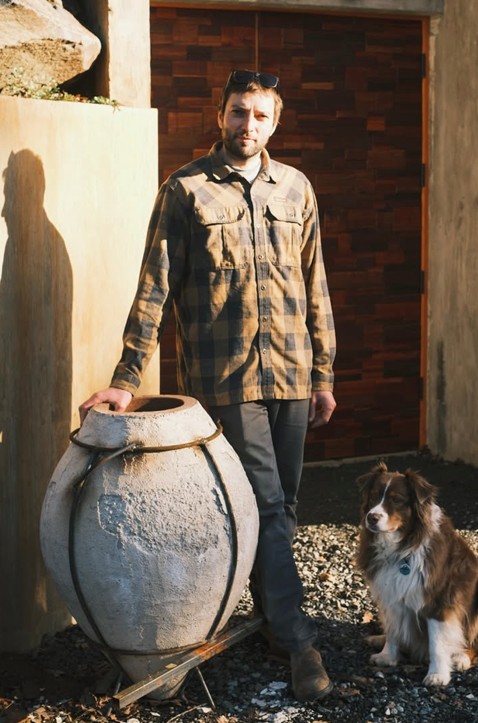
Previous owner of the White Salmon Baking Company in - you guessed it - White Salmon, WA and a fellow ex-Marylander, Jure Poberaj also happens to be the nephew of Josko Gravner, a singular and iconic natural wine producer in Italy’s Friuli region. Jure began his wine project a few years back while he was also running one of the PNW’s best wine bars: Soça, named for an alpine river that runs through western Slovenia and northeastern Italy, where his family roots lie. His project, even in its infancy, shows why I love the Columbia Gorge. He utilizes buried amphora like his uncle and utilizes long skin-macerations for some of his white wines, which is very traditional in northeastern Italy. He also makes a few wines which contrast his Italo-Slovenian heritage including this Mencia, an aromatic grape native to northwestern Spain. These grapes happen to be sourced from the Biodynamic Analemma vineyard, farmed meticulously by Stephen Thompson on the south-facing sun-washed hills at the eastern edge of the Columbia Gorge in Mosier, OR. Fermented in underground amphora and aged in Slavonian oak cask, this a wonderfully unique and delicious expression of the variety. Bring your charcoal grill to a Spring weekend mountain tailgate and enjoy this with some burgers, you might even catch him out there on the slopes; he frequents Bachelor and our biking trails.
Chiara Condello - Sangiovese Predappio 2021
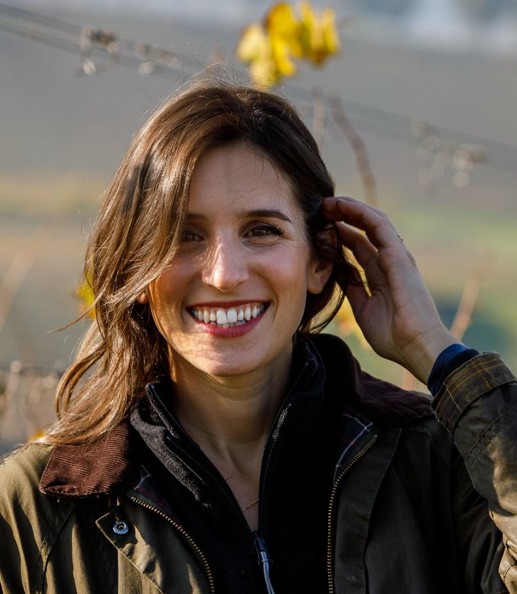
Chiara grew up in the small village of Predappio, raised by her grandparents until she was 14. Her grandfather tended vines and farmed other crops, so she learned about farm and vineyard life from a very young age. She went to business school and was supposed to start a job at a consultancy, but had a couple months off so she went home to help with the family vineyard, now her father’s winery. Little by little, after repeatedly postponing reporting to the job she recently studied for, she realized that she was not postponing - making and farming wine was her calling, and she wanted to stay in Predappio. This area is the geographic origin of the Sangiovese grape, and written regional winemaking rules date back to 1383. The Sangiovese di Predappio clone they grow here is different than the type you’d find in Tuscany, with smaller berries and thicker skins. Just 30km from the Adriatic Sea, there are strong winds that blow through the vineyards which lessens disease pressure, and the soil is comprised of a rock called Spungone which is made of sand, corals, and fossils from the ancient sea floor that used to underly the entire area. Her vines are planted at high elevations for the region and her wines are gorgeous, having earned her some incredible accolades. She is often looped in with Giulia Negri and Renato Vezzi, both previously featured in wine club, as well as Arianna Occhipinti, as Italy’s next generation of visionary winemakers. This, her entry-level, is one of the most engaging Italian reds I’ve tried for the money. Pop this on a blustery & rainy spring night when you cancel your plans because just can’t go back out. Saluti!